Media & Issue Monitoring
Real-time monitoring, filtering and analysis of issues, trends, key actors, sentiment and geographic distribution rests on this store.
Home · Source
The NIRES Media Monitoring Database is the source of record for NIRES from Artha Solusi Indonesia. It holds the continuous monitoring of 3,000+ online media outlets and 5 social platforms, and receives every analytical result back through the continuous feedback loop.
NIRES Media Monitoring Database
The NIRES source of record: where monitoring of 3,000+ online media outlets and 5 social platforms is held and enriched by every analytical result.
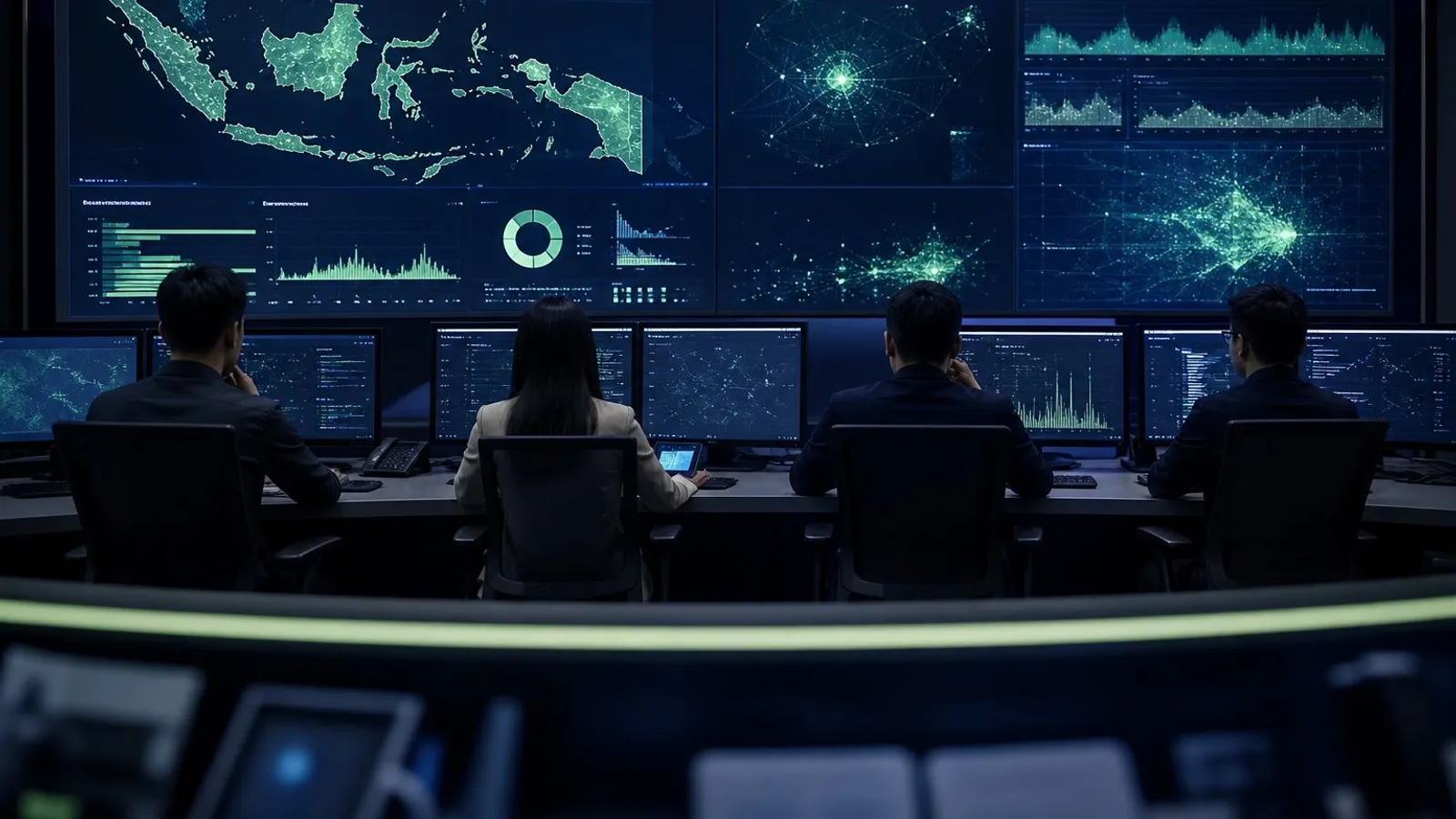
This is not an analysis module. It is where the intelligence pipeline starts and where it returns. Continuous monitoring of 3,000+ online media outlets and 5 social platforms flows in, so every later stage reads from one consistent body of evidence. Questions about where a finding came from have one answer.
Because it sits at stage 0, every module reads from it: Relevant Issues Filtering Engine and Strategic Context Orchestrator at stage 01, Narrative Event Detection, Strategic Insight Composer and Trend & Escalation Assessment at stage 02, through to Digital Sentiment Assessment and Media Impact Assessment at stage 05. Outputs from the evaluation stage are written back, so each monitoring cycle starts from a richer picture than the one before.
Monitoring covers 3,000+ online media outlets and 5 social platforms in real time, capturing issues, trends, key actors, sentiment and geographic distribution.
Relevant Issues Filtering Engine reads this store to narrow the stream into relevant issues, and Strategic Context Orchestrator reads it to place those issues in strategic context.
Outputs from Narrative Event Detection, Strategic Insight Composer, Trend & Escalation Assessment, Digital Sentiment Assessment and Media Impact Assessment return to the database.
Real-time monitoring, filtering and analysis of issues, trends, key actors, sentiment and geographic distribution rests on this store.
Turning media data into strategic context and detecting narrative developments with AI/LLM begins with the records already collected here.
Analysts work directly on the monitoring records; operators use the consistent history to trace an issue over time.
Communications teams and executives read the dashboards, trend views and AI-powered executive summaries built from this data.
One store, read by every module and enriched by every result — the reason a NIRES cycle compounds understanding.
It is the source of record in the NIRES architecture. Every result of monitoring 3,000+ online media outlets and 5 social platforms is held there, and all eleven modules across the five stages read from it. It is not an analysis module itself, but the shared body of evidence the analysis runs on.
Monitoring results enter continuously, while analysis outputs return through the continuous feedback loop. Findings from the analytics and evaluation stages are written back, so the next cycle starts from a fuller picture. This is what makes NIRES a cycle rather than a one-off report.
Analysts read the records directly, communications teams use the filtered and composed outputs built on them, and leadership sees the dashboards and AI-powered executive summaries. Access is governed by RBAC and multi-tier approval inside the NIRES dashboard, so each role sees the data its remit requires.
Next step
Let's talk with PT Artha Solusi Indonesia about deployment, integration and operator training for NIRES.